


From Graduate to Confident Clinician

By Therapy Focus
What’s it really like to go from University to your first therapy role?
At our recent Graduate Careers Webinar, graduates shared their experiences and lessons from making the move from student to clinician, including building confidence, finding support and navigating moments of self-doubt.
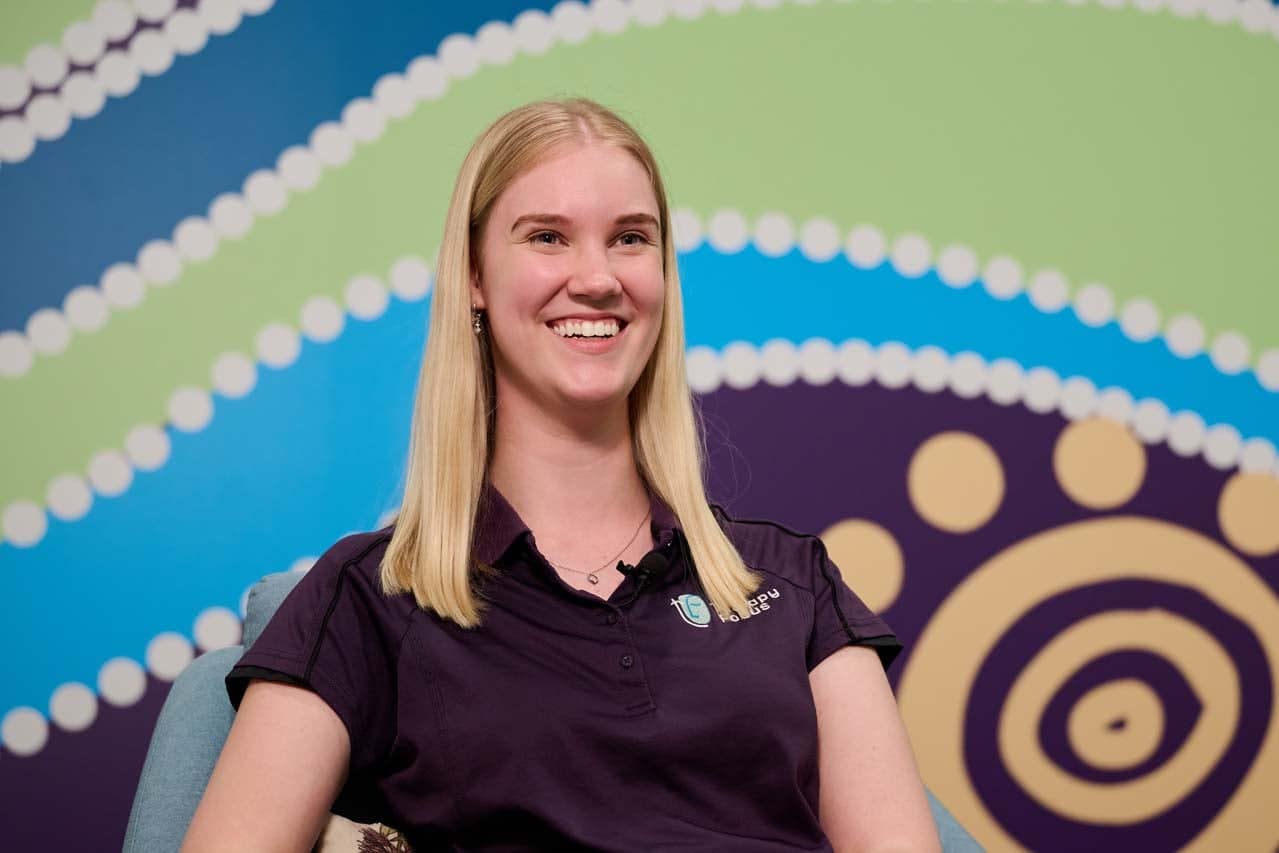
Therapy Focus OT Kaitlyn Halls joined the panel to share her own graduate experience. Here’s what she had to say.
What were you most worried about as you prepared to become a therapist?
“I think my biggest worry was just that transition from being a student on placement to then suddenly being the therapist that’s responsible for delivering that service.”
“I was a bit worried about how confident I would feel to do that job independently, without as much guidance from a supervisor. But I think, like Lily said, those longer placements in final year really helped to ease that concern for me because, by the end of it, I was already kind of doing the job.
I think just having that opportunity to kind of manage your own caseload and really increase the level of independence that you were working with those clients, and doing all of the admin jobs, was really reassuring.
Having my placement actually at Therapy Focus Mirrabooka, one of my final placements, made that transition smoother. I knew what to expect and what the role consisted of. It meant that I was kind of able to go in with a bit more confidence.”
What surprised you the most about the transition?
“One of the things that surprised me the most was just how quickly you pick things up. And I think it’s very much a learning by doing.
I think certain reports, like the first time you do it, it takes way longer than it should. But the more that you do things, things just become quicker. The information is just there, ready to go.
And yeah, I think it was also really surprising how quickly you can develop your skills just by putting yourself out there and saying yes to opportunities when they pop up. I think that’s a really great way to just learn as much as you can in those early years, build your skills and feel more confident.
But yeah, I think it was also just surprising how smooth that transition was and how quickly you kind of take to the role. It’s like a duck to water in a way.
You don’t know unless you try it. So I think that’s something that surprised me, just how quickly you can slot into the role and slot into the team.”
Have you had a moment in your graduate year where you’ve doubted yourself and how did you work through it?
“I feel like that’s an ongoing thing. But yeah, particularly I think in the first six months to the first year, there were definitely moments I doubted myself or felt that sense of imposter syndrome.
And I think in the early stage, it was definitely when I would go to sessions and families would ask me questions about things. It might be something really specific about the NDIS, and I wouldn’t necessarily know the answer to the question immediately. And I’m kind of like, oh gosh, am I qualified to answer this? Just feeling that panic to kind of be able to provide some sort of response in the moment.
But I think I realised that it is OK to just say, look, I might just have to look into that or ask someone in the office that’s got experience with that and get back to you, so that you can develop a really well-rounded answer and provide the correct information.
Because I think at the end of the day, that ends up looking a lot more knowledgeable and trustworthy as a clinician than just trying to provide whatever information is in your head at the time, in that moment. And I think it’s a lot more useful for families too.
But I think it was also handy being surrounded by an office of incredible clinicians. Just seeing they don’t always have the answers all the time either. And I think everyone just has information in different areas. It’s OK to not know everything and kind of pick other people’s brains for those gaps in knowledge because more brains together, more information, better for all of the participants involved.
So yeah, I think just seeing that everyone else is experiencing the exact same thing as you was really helpful.
But I think something that was reassuring to work through was kind of just double-checking what I was planning, thinking, doing, like my clinical reasoning around sessions, and seeing how it was actually quite in line with what other therapists were doing and saying, like, OK, I’m on the right track. Like, my clinical reasoning is actually pretty decent.”
What kind of support or supervision has made the biggest difference within those first few months?
“I think having a really good clinical supervisor and being paired with someone who has, I guess, similar areas of interest in terms of their caseload, and who could be quite knowledgeable in those areas that I was probably going to have questions pop up about, was really cool.”
“And it was a lot more frequent in the first sort of three to six months. I think for the first three months, it was weekly, and then it would just gradually taper to monthly. I still have ongoing monthly supervision now.
But I guess on top of that, we would have monthly one-to-ones with our team leader at the base, just for all those operational questions rather than the clinical questions, which was really good for helping with caseload planning, like clustering travel. Because that can sometimes be a bit of a nightmare when you’re trying to cluster families, schools, and people are very rigid in certain areas and can only do a certain time.
So yeah, it was really nice having that sort of operational supervision and clinical supervision.
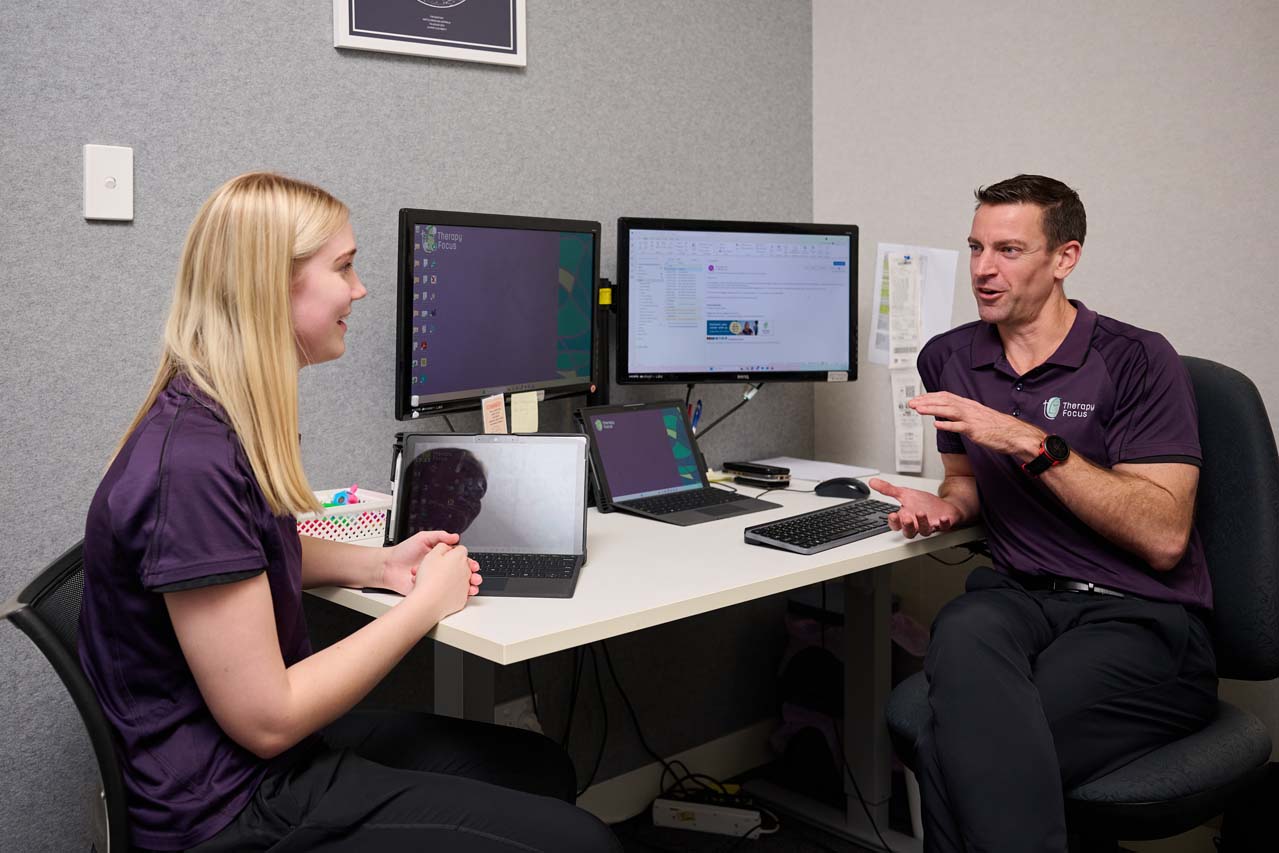
And then I think something that made the biggest difference just day to day was having so many experienced therapists in the office. Like, you could swivel around in your chair and just ask someone a question.
And so I think it’s just so valuable having experienced clinicians around to just pick their brains if you’ve got a question and you need a relatively quick, efficient response, to just be able to pull on the resources directly around you.
And I think it’s just so inspiring as well to learn off the people that are around you day to day, especially doing joint visits with speech pathologists, getting to work really closely and see what they’re doing and upskill.
So yeah, I think all those different areas of supervision have been so helpful for building my confidence.
There’s little bite-sized pieces of learning where you’re like, ‘What would you do?’ And they give you two or three things, and you’re like, ‘Great, here I go. I’m going to have a go.”
Why did you choose Therapy Focus?
“I think one of the biggest reasons I chose Therapy Focus was because I had such a positive experience in one of my final placements, particularly at the Mirrabooka clinic, which thankfully I was able to be offered a position at.
I think it was just so reassuring knowing that there was such a good culture at the base. I think that was something that was a priority and was really important to me in my first job, having a really good workplace culture and having supportive people around.
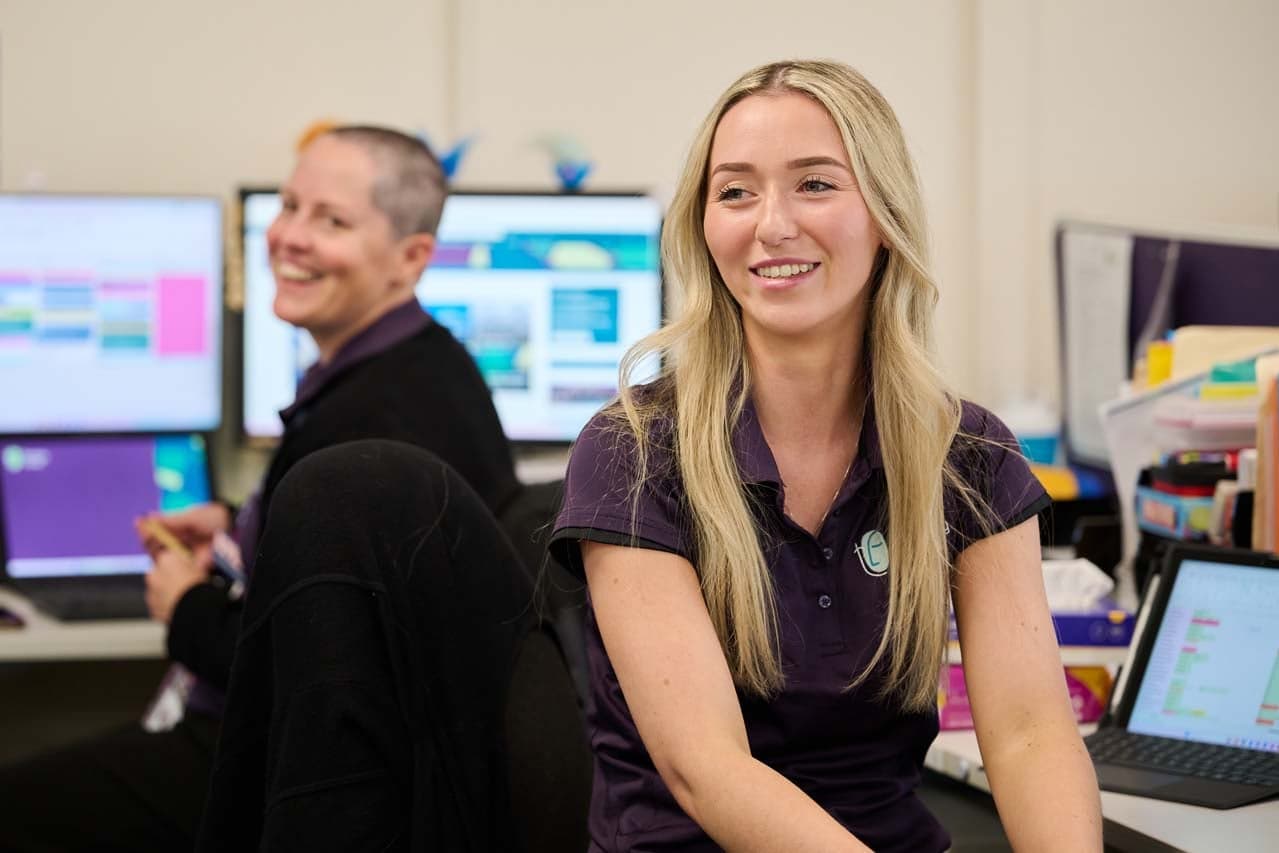
Like, people that you get up and you want to go to work in the morning, which is exactly how I feel with the people I work with. Like, some days when you don’t get up for the clients, you get up for your work friends.
And yeah, obviously as well, I had a lot of experience with understanding the job role and what was required of me, so that gave me a lot of confidence that I knew what I was getting myself into.
But yeah, I think just having such a great experience definitely led me more towards Therapy Focus.”
What is your hub or clinic life like at Therapy Focus?
“It’s pretty awesome. I won’t lie.
Obviously we get our work done, but we’re always kind of ordering fun drinks, whether that’s bubble tea or coffees.
Like, we’re big fans of a fun drink to motivate us to get our notes done and do the reports.
There’s allied health memes around the office, which only us allied health professionals would really appreciate and understand.
We now have a pet-friendly work policy as well, so my beautiful Border Collie has been coming in. She’s a therapy dog in training as well, so that’s been really nice to be able to bring her in while we’re on that journey, and obviously lovely to get all the pats in between notes.
I use that as a motivator as well. I’m like, ‘I’ll write this note and then I can pat my dog.’
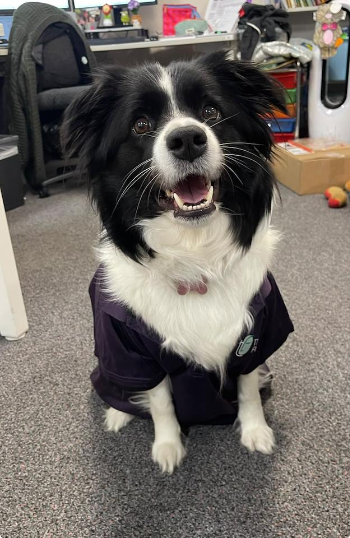
Kaitlyn’s Border Collie named Bonnie (therapy dog in training)
Graduate Program
Our graduate program is designed to give new therapists the support, training and community to thrive from day one.
By Therapy Focus
Last Updated 20 Oct 2026