

















Dietetics and the NDIS
By Therapy Focus
Written by Therapy Focus Dietitian, Maddie Todd.
At Therapy Focus, our team of experienced dietitians work closely with other allied health therapists to help children and adults with disabilities achieve their goals.
How can dietitians support people with disability?
Dietitians can support people with disability in a range of areas. Some of the areas include:
- Supporting diets for people who experience difficulties with chewing and swallowing
- Fussy eating or resistant/picky eating
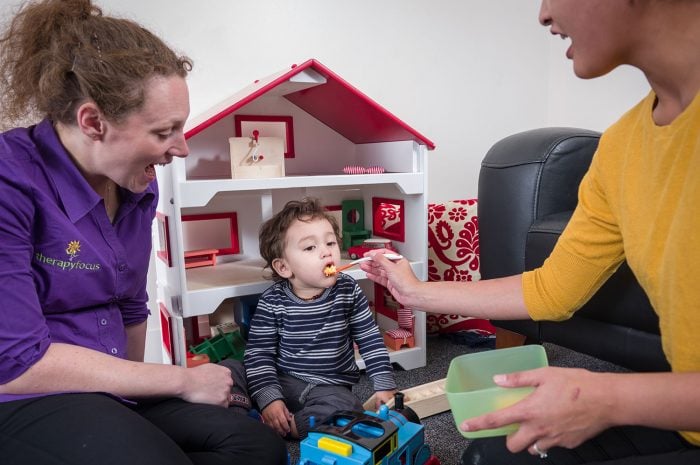
- Stressful mealtimes and other mealtime challenges such as food refusal, not coming to the table, eating with distractions or avoidance to eat socially
- Bowel issues (e.g. constipation, diarrhoea, coeliac disease, limited fluid/fibre intake)
- Pressure injuries (e.g. poor wound healing, prevention of pressure areas)
- Limited range of foods eaten which can lead to nutritional deficiencies and poor social or participation outcomes
- Excessive weight gain which impacts physical or social function
- Supporting optimal growth and development
- Non-oral feeding (tube feeding) and tube weaning
Can dietetic services be accessed using the National Disability Insurance Scheme funding?
In short, the answer is yes.
NDIS participants are given choice and control regarding their goals and how they receive support to achieve those goals. This means that a participant can choose to use funds from their NDIS plan to access support from a dietitian if they feel it will help them to achieve their goals.
As with all planning under the NDIS, the needs of NDIS participants should be considered on an individual basis. What this means is that dietetics can be included in participant plans if judged as ‘reasonable and necessary’ against the criteria that apply to all funded supports.
Some other criteria that need to be met for NDIS funding to be considered include:
Functional capacity
Dietary support must relate to a person’s function. This can include building or maintaining function in the following areas:
- Communication
- Social interaction
- Learning
- Mobility
- Self-care
- Self-management
Dietary support links to your disability
Dietary support under the NDIS must relate to a person’s disability and must not be able to be funded by other service systems (e.g. public healthcare).
Want to learn more?
Our dietitians assess and support a range of issues related to diet and nutrition.
By Therapy Focus
Last Updated 16 Dec 2021